
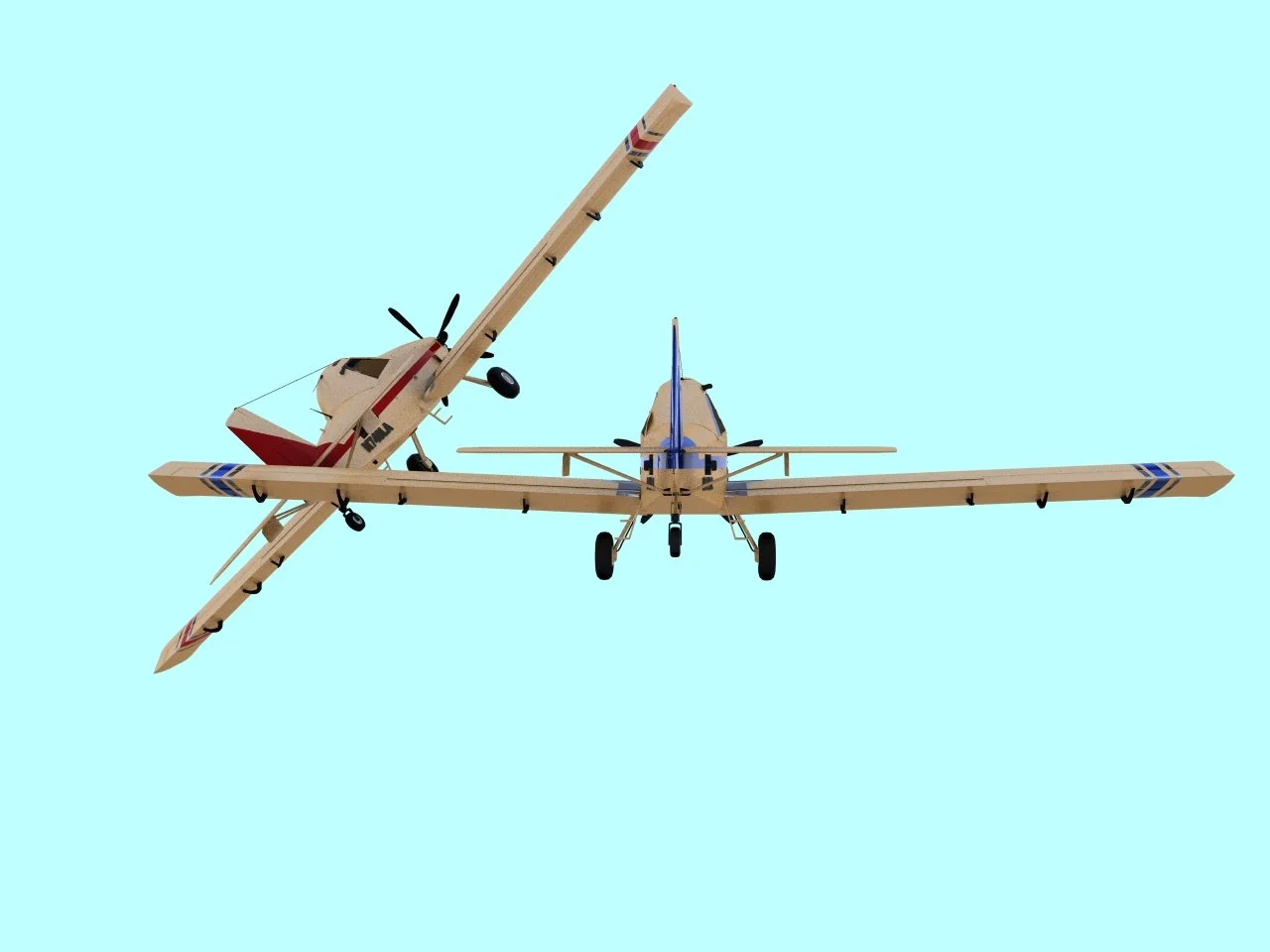
Midair Collision Reconstruction
Midair collisions turn on geometry, visibility, and time: where each aircraft was, what each crew could have seen from where they sat, and how many seconds were available to react. Answering those questions requires reconstructing both flight paths from recorded data and testing the result against the physical evidence on both airframes.
Reconstruction Methodology
• Flight path reconstruction from recorded radar data, ADS-B, and GPS telemetry
• Extraction and analysis of non-volatile memory from avionics and engine monitors
• Three-dimensional computer modeling of converging flight paths and closure geometry
• Cockpit visibility analysis, including window post and airframe masking of the approaching aircraft
• Evaluation of see-and-avoid obligations under 14 CFR 91.113
• Correlation of modeled impact geometry against wreckage damage signatures on both aircraft
• Review of ATC communications, traffic advisories, and installed collision avoidance equipment